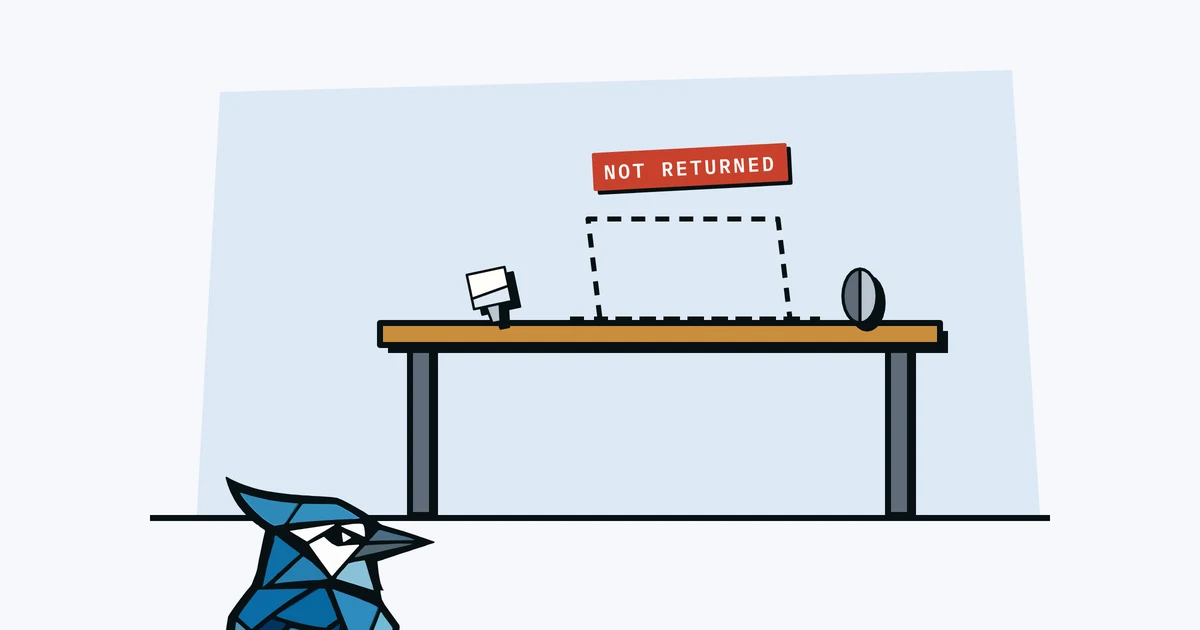
So someone left your company and didn't return their laptop. Or their monitor. Or that keyboard you forgot you'd even given them. You're now in the uncomfortable position of chasing down equipment from someone who no longer works for you, and you're not sure what your options are.
This is very common, and most of the time it isn't theft. Usually nobody asked for it back or kept track of it, and the person assumed they'd hear from you if it mattered. That doesn't make it less frustrating, but it does mean the situation is usually recoverable.
What to Do Right Now
If you're reading this because you have an active unreturned equipment situation, here's what to do.
1. Document What's Missing
Before you contact anyone, figure out exactly what's outstanding. Dig through purchase records, emails, old spreadsheets, whatever you have. Write down every item you believe the person still has, along with the make, model, and approximate value. If you have serial numbers, include those too.
A specific list helps because "Hey, can you return our stuff?" is a much weaker message than "We're missing the following items assigned to you: MacBook Pro (serial XYZ), Dell monitor (27"), Apple Magic Keyboard." Specificity makes the request feel real and trackable.
2. Send a Formal Written Request
Don't rely on a Slack message or a casual text. Send a proper email (or letter, if email isn't an option) that clearly lists the equipment, states that it belongs to the company, and asks for it to be returned. Keep the tone professional but direct. You're not accusing them of anything. You're just saying: "These items belong to us and we need them back."
Include a specific deadline. "Please return the items by [date, 7-14 days out]" is better than "at your earliest convenience," which means never. If the person is remote, offer to send a prepaid shipping label. Remove friction wherever you can.
3. Follow Up Once, Then Escalate
If the deadline passes with no response, send one follow-up. Reference the original email, restate the deadline, and mention that you'll need to take further steps if the equipment isn't returned. Keep it professional and avoid anything that reads as a threat.
If that gets ignored too, you're into the legal options, which get messier.
The Legal Angle (It's Complicated)
This section isn't legal advice. Employment law varies wildly by jurisdiction, and the rules around unreturned company property differ between countries, states, and even local municipalities. What I can do is flag the things you should be aware of so you can have a smarter conversation with a lawyer if it gets that far.
What You Generally Can't Do
- Deduct from final pay. In most jurisdictions (including most US states and the UK), you cannot withhold or deduct from an employee's final paycheque to cover unreturned equipment without their written consent. Even if they signed an equipment agreement that mentions deductions, local law often overrides that clause. Don't assume you can do this. Check with a lawyer first.
- Withhold final pay entirely. This is almost always illegal. You owe them their wages regardless of whether they've returned your stuff.
- Show up at their home. Don't. It isn't worth the liability, and it could end in a restraining order.
What You Generally Can Do
- Send a formal demand letter. A written letter (ideally from a solicitor or attorney) stating the value of the unreturned equipment and requesting its return. This is often enough to resolve the situation. The cost of a demand letter is usually far less than the value of the equipment.
- File a police report. If the value is significant and the person is clearly refusing to return the equipment, this is technically theft or conversion in most places. In practice, police often treat this as a civil matter, but having a report on file can support other actions.
- Small claims court. For equipment worth a few hundred to a few thousand dollars, small claims court is the most practical legal route. You'll need documentation: proof of purchase, proof of assignment, and evidence of your attempts to recover it.
Legal action is almost always a last resort and often costs more in time and energy than the equipment is worth. For a single missing laptop, a demand letter often resolves it. For a pattern of unreturned equipment across multiple departures, the fix is in how you hand out and collect equipment, which the rest of this post covers.
Why This Happened in the First Place
If you're dealing with unreturned equipment, chances are one or more of these things are true:
- No assignment records. You don't have a clear record of what each person was given. Maybe it was in someone's head, or in an email thread from two years ago, or nowhere at all. You can't ask for things back if you're not sure what you handed out. Our guide on tracking who has what equipment covers how to fix this.
- No equipment agreement. The employee never signed anything acknowledging what they received or agreeing to return it. Without a written equipment agreement, the return conversation has no foundation. It's your word against theirs about what they were given and what the expectations were.
- No offboarding checklist. The departure happened and nobody had a list of things to collect. The laptop usually gets mentioned because it's obvious, but the charger, headset and second monitor at their home office tend to be forgotten until weeks later. A proper offboarding checklist catches all of it.
- The departure was messy. Quick resignations, terminations, or just awkward endings where nobody wanted to have the "give us our stuff" conversation on someone's last day. That's understandable, but it still costs you money.
Building the System So This Doesn't Happen Again
It's common for a company to lose some equipment, scramble to get it back, promise to fix the process and then not get round to it before the next departure. These are the things that help.
Assign Equipment Formally
Every piece of equipment should be tied to a person in a system of record. Not "I think Ingrid has the Dell monitor" but a proper assignment with a date. When equipment changes hands, the record updates. It's a bit of overhead, but it saves a lot of guesswork when you're trying to figure out who had what six months after a departure.
Use an Equipment Agreement
Have every employee sign a simple document when they receive equipment. It can be simple, as long as it lists what they received, states that it belongs to the company, and sets the expectation that it's returned when they leave. If you don't have one, our guide on what to include in an equipment agreement will get you started.
Have an Offboarding Checklist
The moment a departure is confirmed, someone should pull up the list of everything that person has and start the return process that day, rather than waiting until their last day or the week after they leave.
The average cost of unreturned equipment is around $2,000 per person. Most of that is preventable with a checklist and a two-week head start.
Track From Day One
All of this depends on tracking. Without a record of who was given what, plus serial numbers and purchase dates, it's hard to prove what's missing, build a return checklist or send a credible demand letter.
You can use a spreadsheet, a tool, or a notebook (though the notebook will eventually let you down), as long as from the moment you buy a piece of equipment, you know where it is, who has it, and what it's worth.
Getting Ahead of the Next Departure
If you're reading this post-crisis, the fix is fairly straightforward. Spend an hour listing every piece of equipment you own and who has it. Get a simple agreement template in place. Add an equipment section to your offboarding process.
AssetJay is built for exactly this situation. You log equipment, assign it to people, and when someone leaves you see everything they have in one click. No IT department needed, and it's free for up to 25 assets. Worth setting up now so you're not back here next time someone gives notice.